
What it is
A journaling product where AI reads between the lines as you write, surfacing cognitive biases, recurring beliefs, and thinking patterns directly inside your own text. Voice, photos, video, and a longitudinal pattern timeline build a portrait of how your mind moves over weeks and months.
Problem
Journaling apps store text. They don't read it.
Most journaling tools are blank pages with a save button. ReflectLoop reads between the lines, surfacing cognitive biases, thinking patterns, and recurring beliefs as you write.
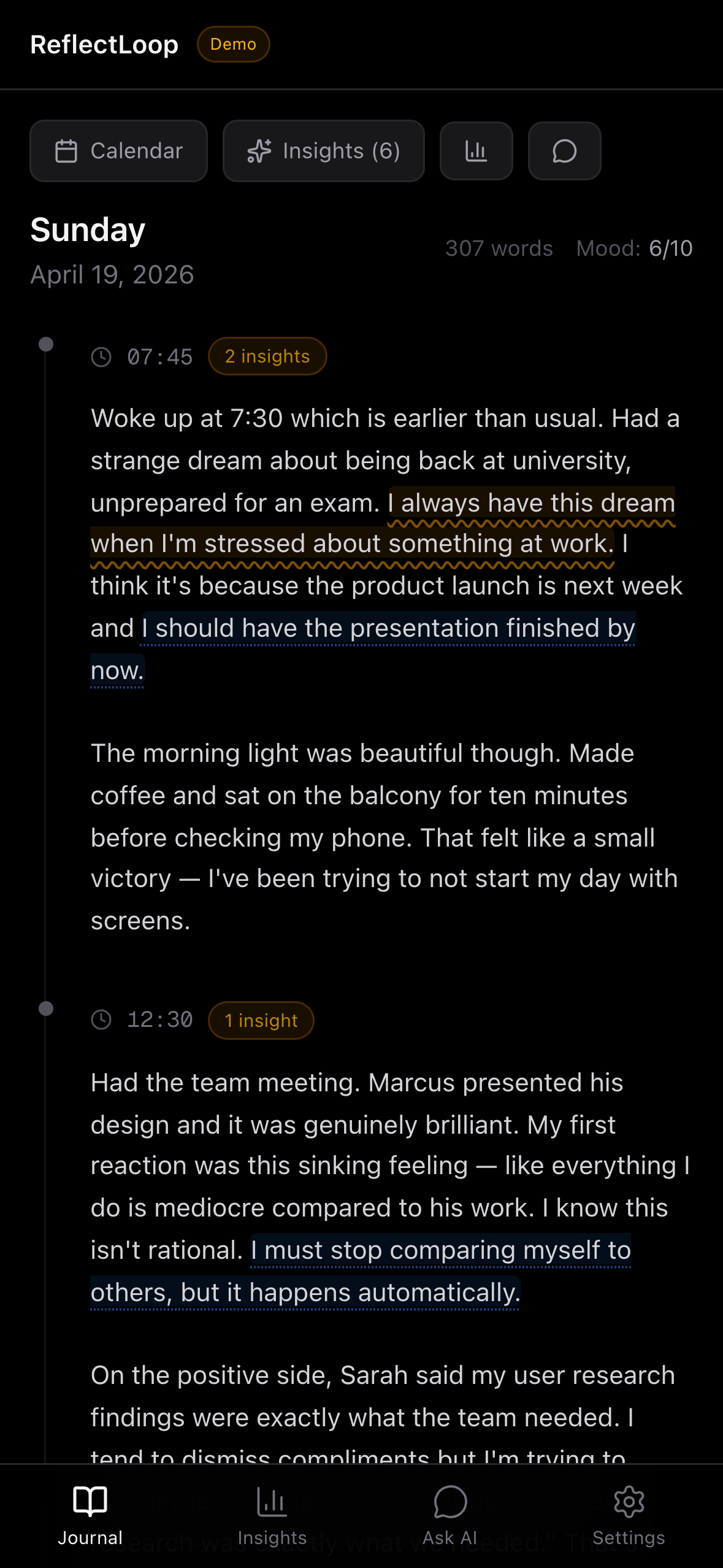
AI reads as you write
Cognitive distortions are highlighted inline, overgeneralization, should statements, catastrophizing, with gentle labels, not clinical jargon.
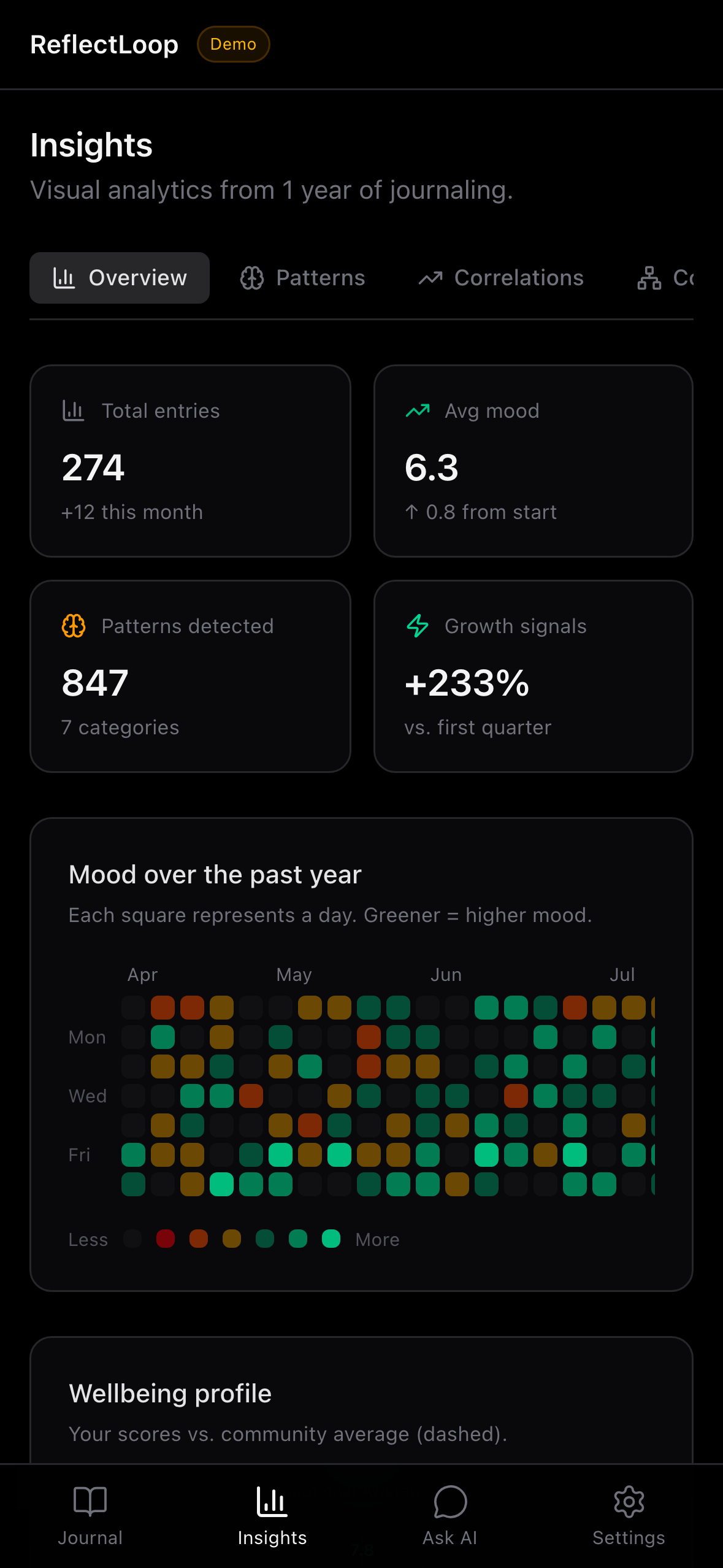
Patterns emerge over time
Weekly and monthly views surface recurring themes. Are you always catastrophizing on Mondays? The data knows before you do.
Product
From writing to insight
Journal
Insights

Features
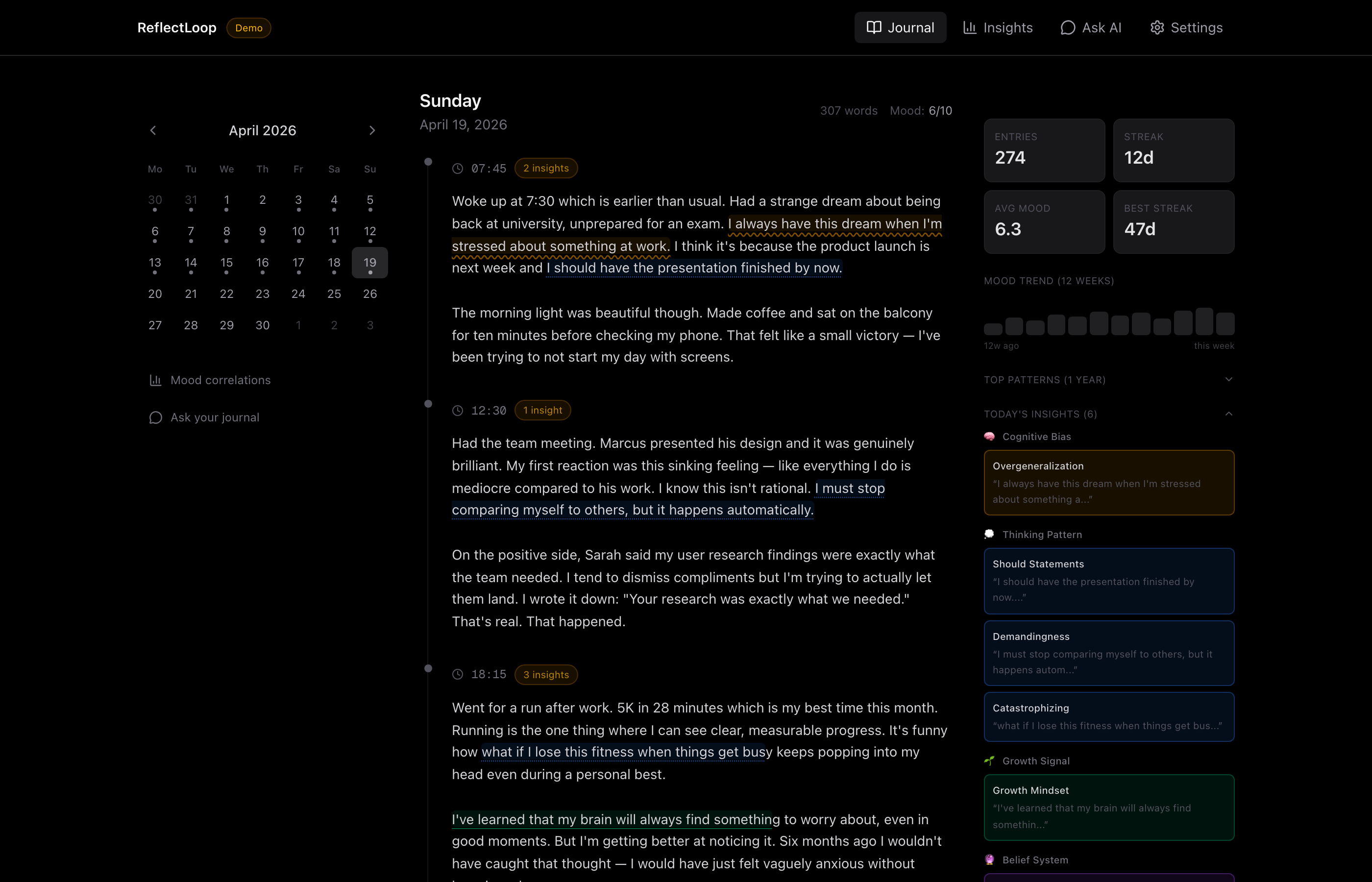
Journal view, desktop. Five categories of patterns underlined inline as marginalia, sidebar groups today's detected patterns and links each to its history.
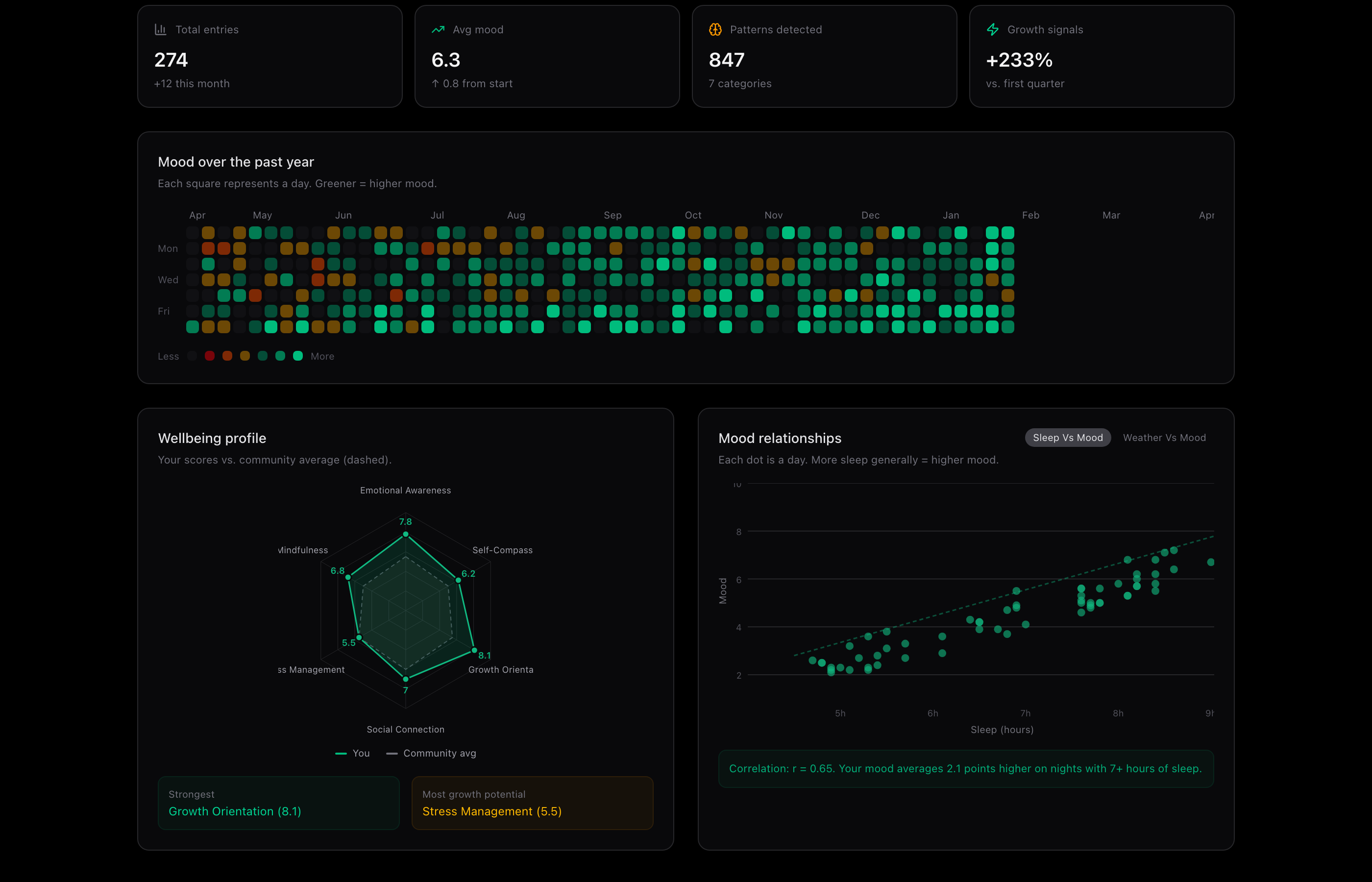
Insights, pattern evolution stacked over a year, with a written-headline callout: 'Growth Mindset increased 230% while Overgeneralization dropped 87% over 12 months.'
Stack & Tools
AI
design
code
infra
Next
ModuMind
Open question
Does naming the bias inside someone's own sentence land differently from explaining the bias in the abstract?
What the data shows
Whether people keep writing after an insight appears, and whether they open the insight panel at all.
What it does not
Nothing here shows whether the writing changed how anyone thought afterwards.
More client and product design case studies at hannadevries.com