Does a counter that tells you nothing still earn its place?
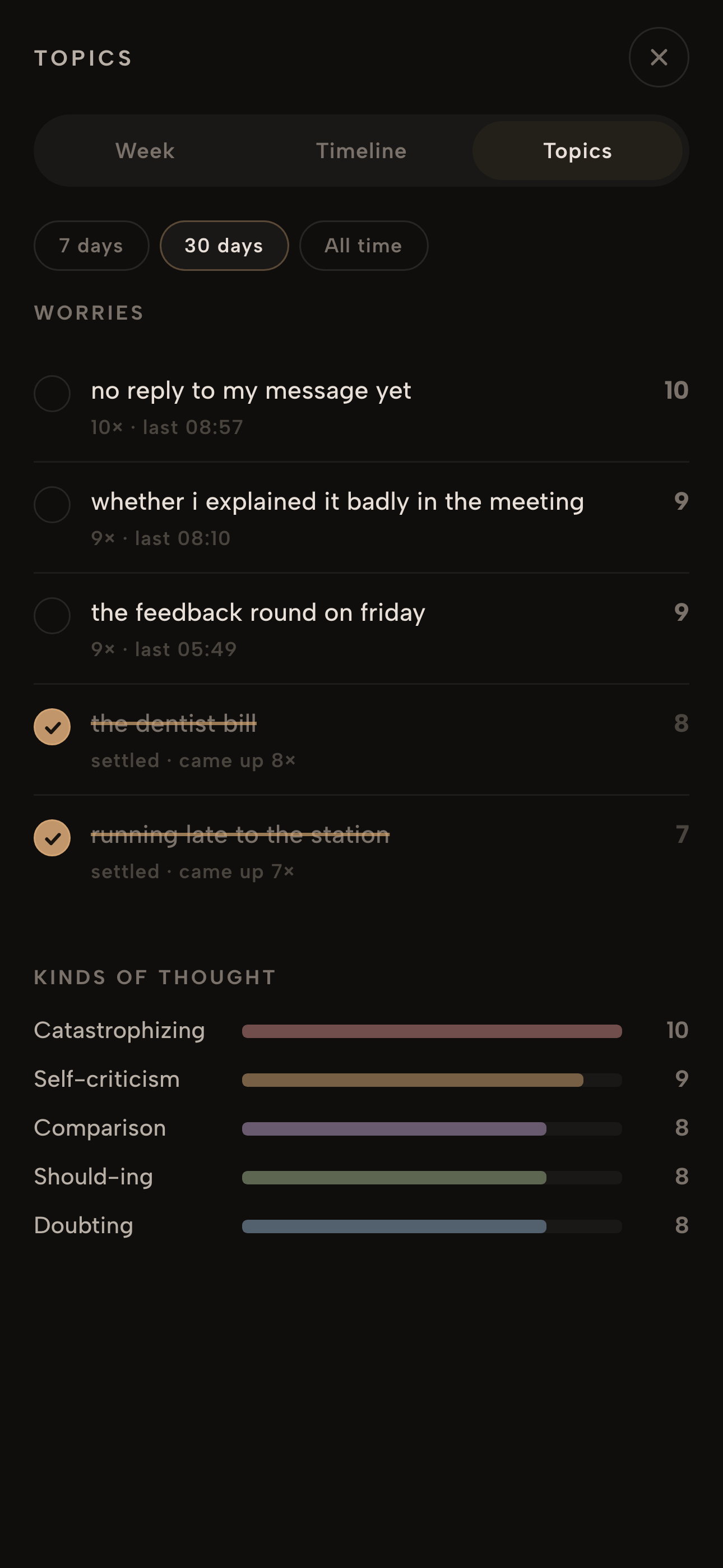
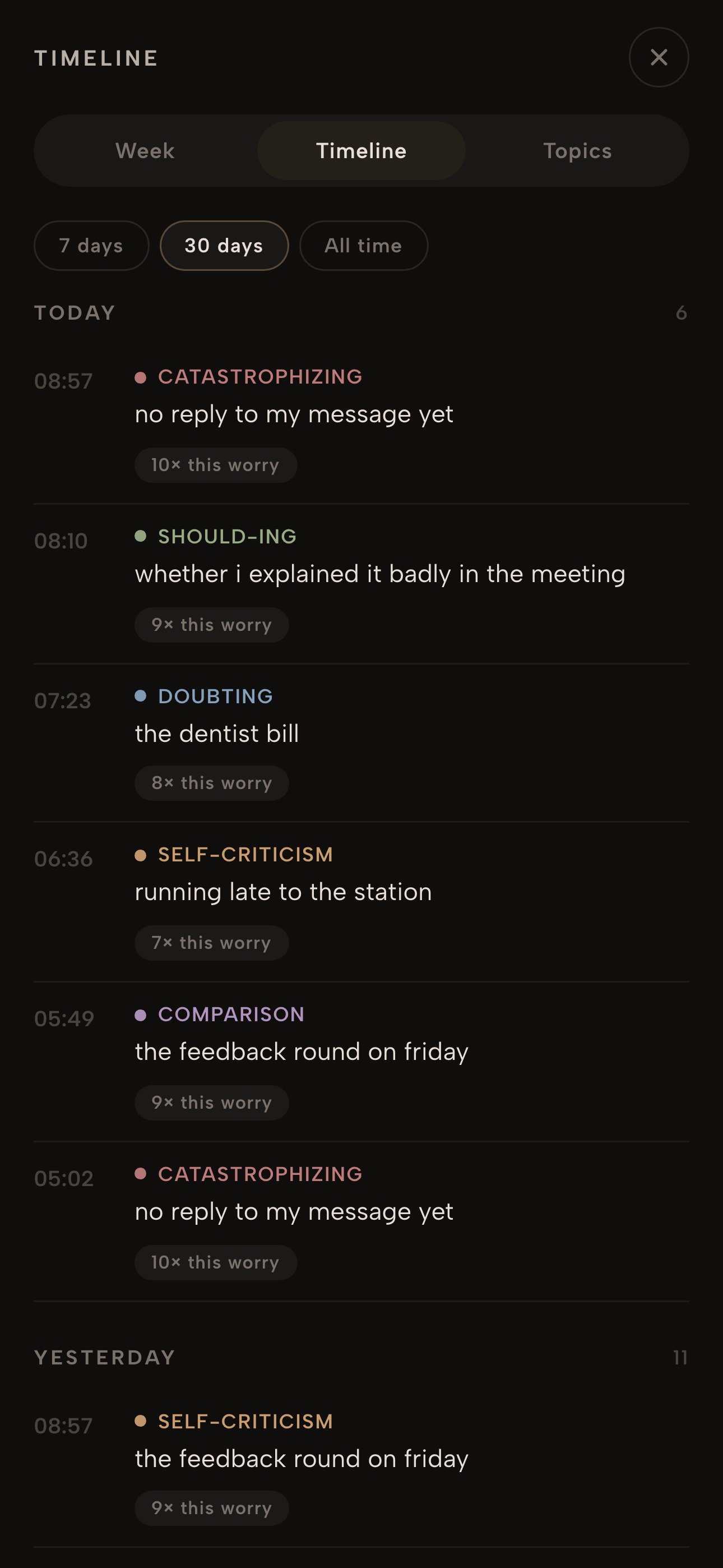
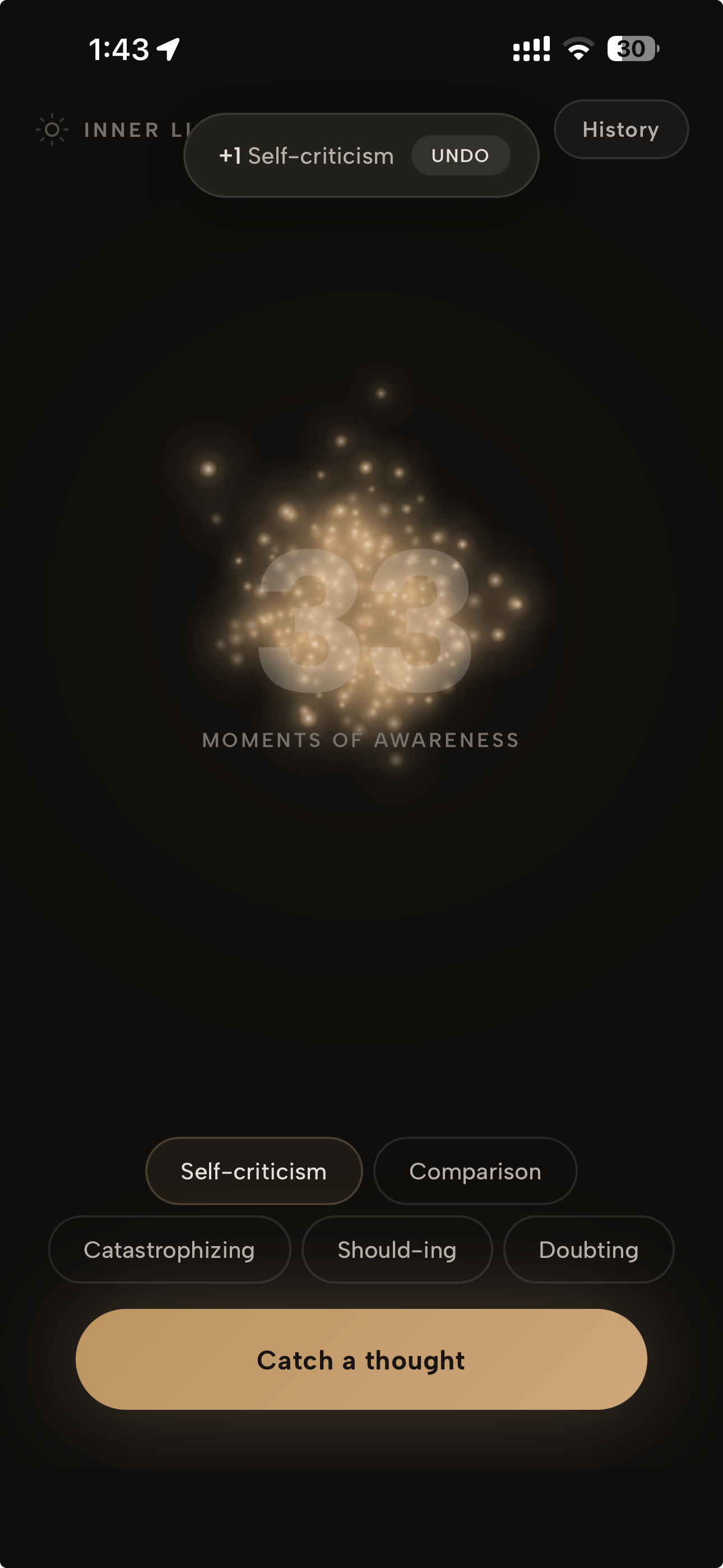
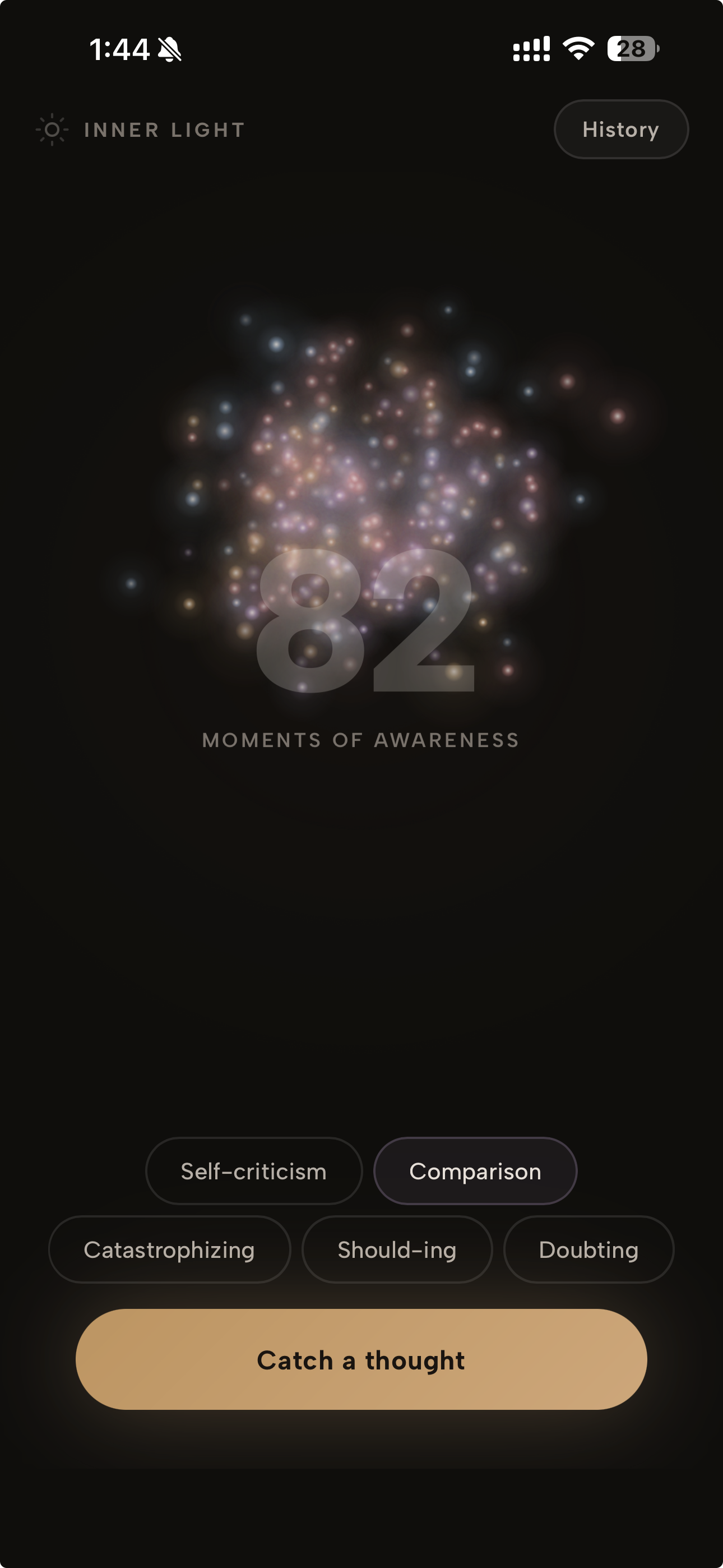
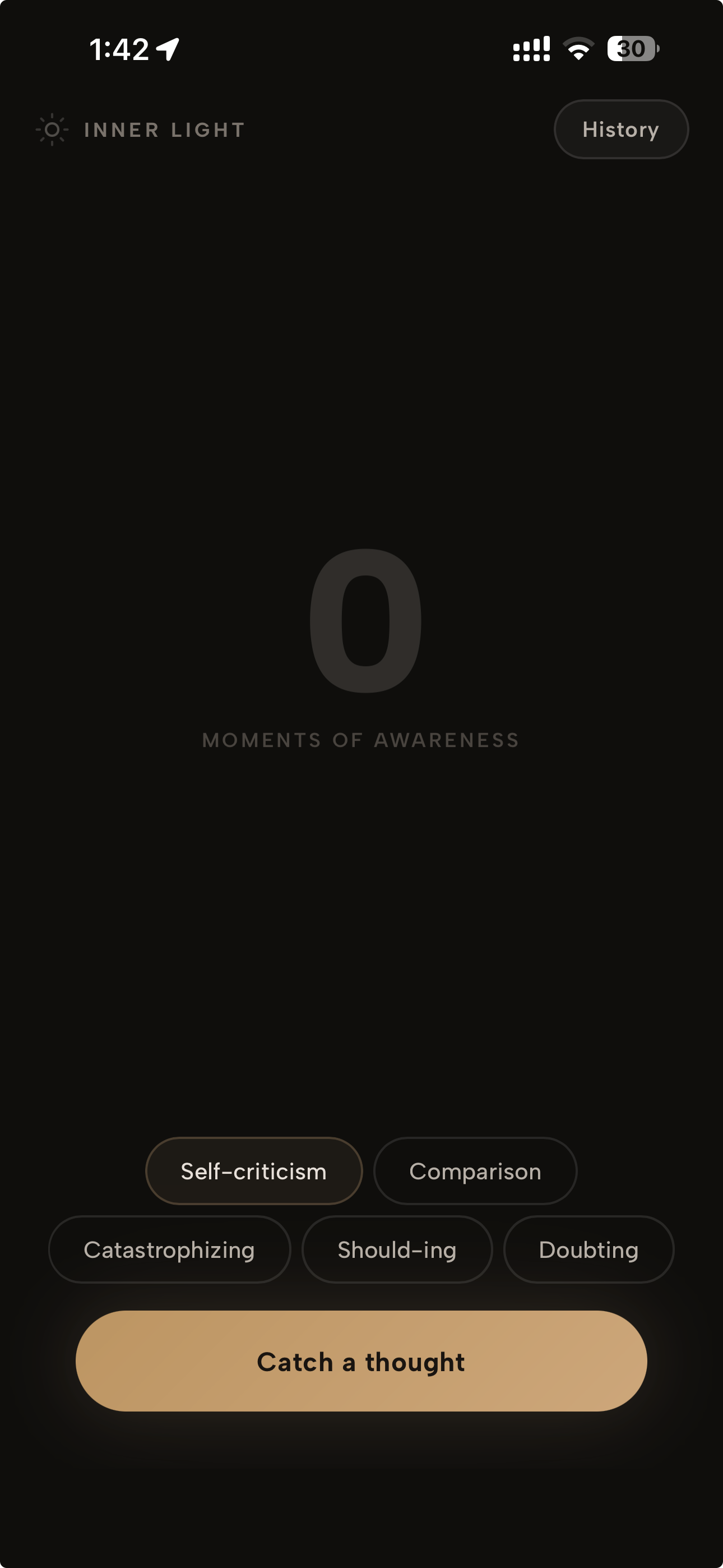
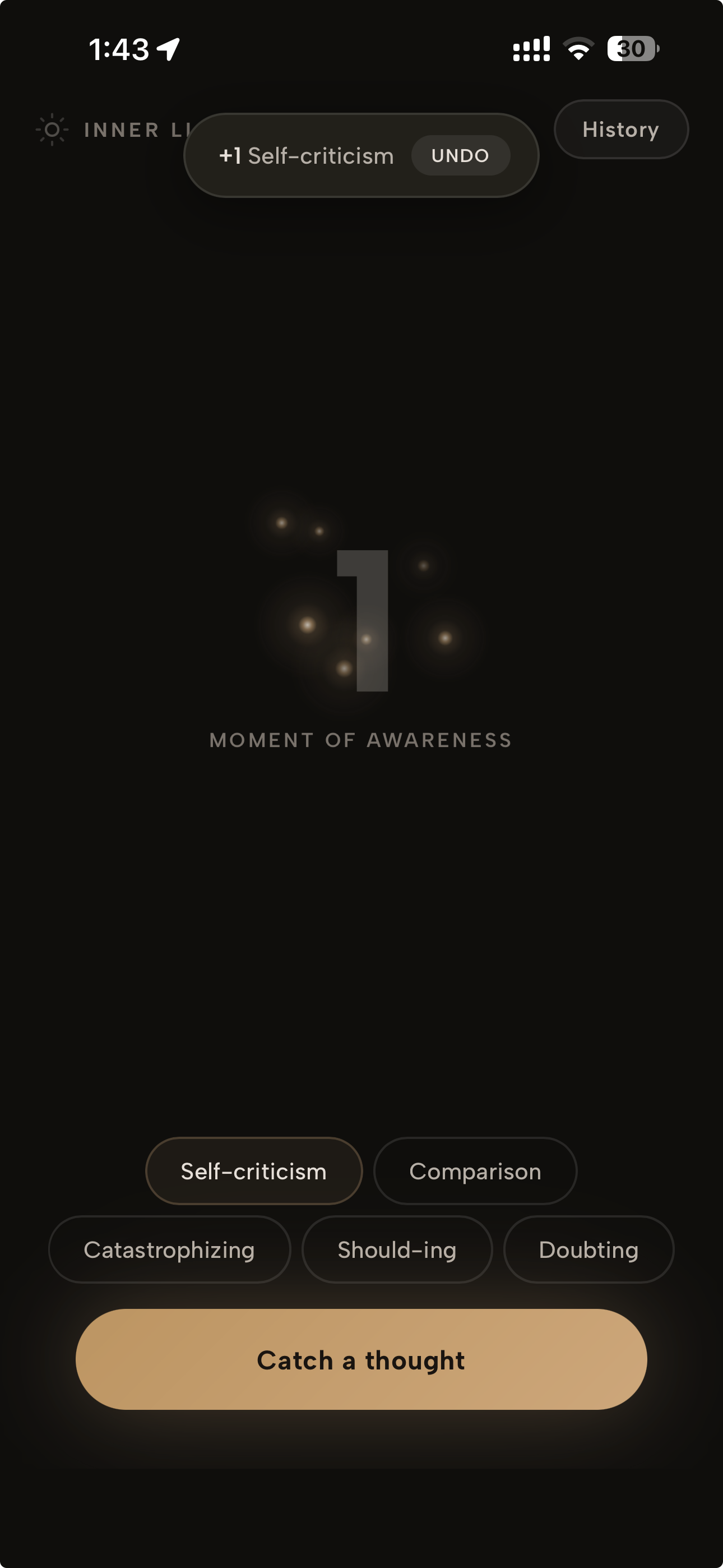
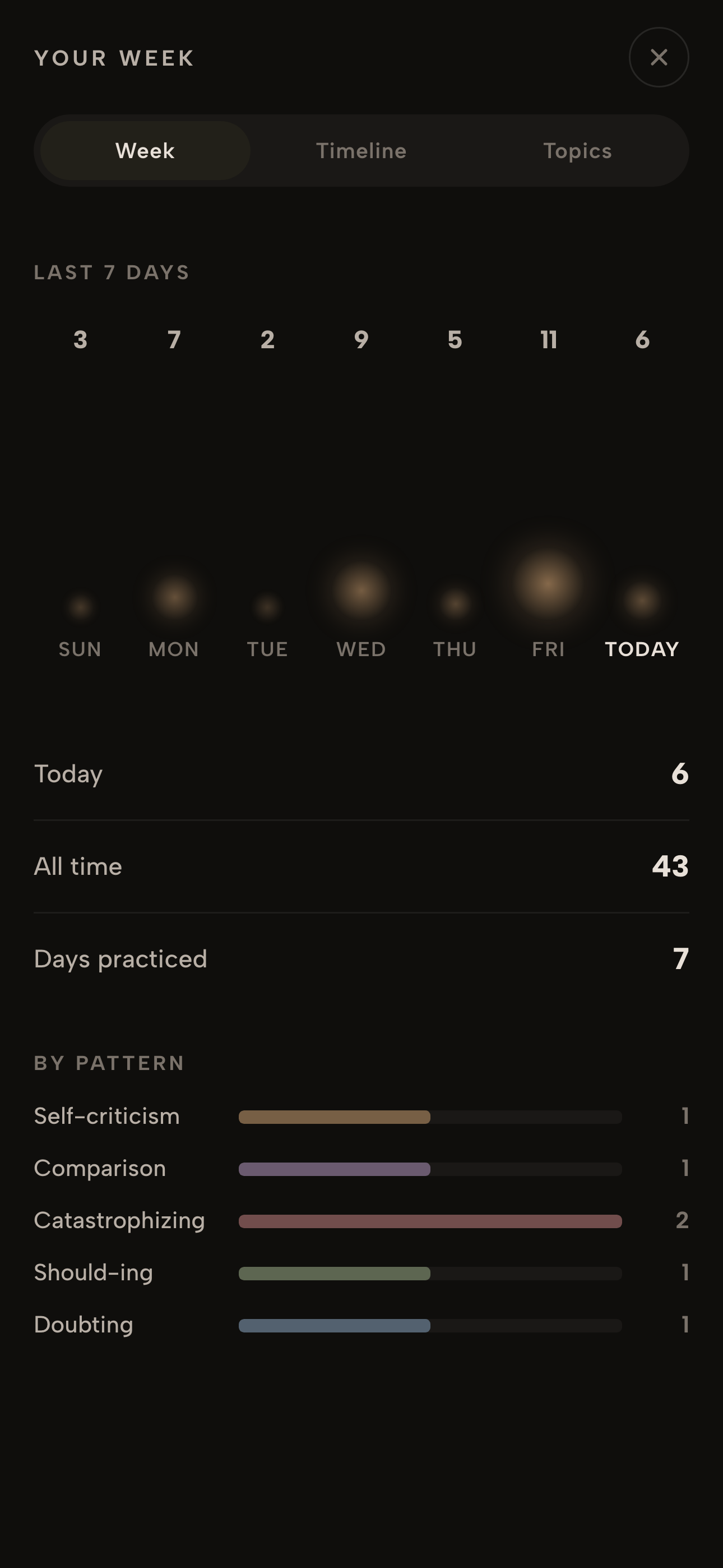
After using the first version for a while, the pattern was clear and useless. A number, and a bar chart of which distortion I reach for most. It could not answer the only question I actually had, which was what I had been going round and round about. Five labels describe the shape of a thought, never its subject. The fix had to not cost the thing that made the app work, so it is one optional line, 140 characters, sitting above the button rather than in front of it. Skip it and the app behaves exactly as version one did. The field is a place to put something, not a gate to get past.
Considered and dropped
Leave it as a counter
Honest to the original constraint, and it means a month of practice produces a tally and no recall. The data was there and the app refused to use it.
A real journal field
Multi-line, with a save step. It answers the question and it reintroduces the exact friction that kills the Daily Mood Log.
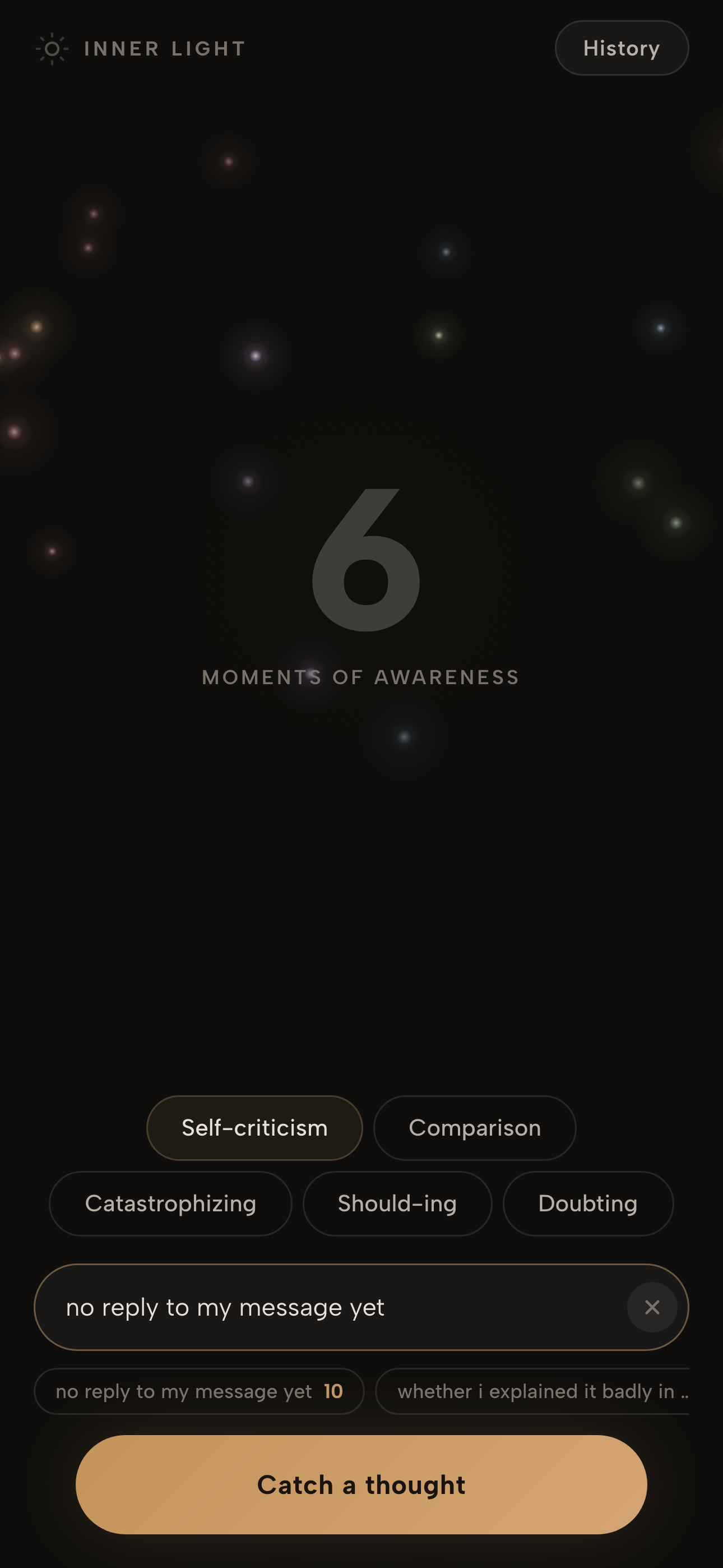
Built. One optional line
'What was it about?' sits above the button, capped at 140 characters, and never blocks the catch. The chips underneath are worries still open in the last three days, so a recurring thought costs one tap and no typing.
Trade-off
It is still a field, and a field is still a decision to make while a thought is passing. Catches with no note are now second-class in every review surface, which means the app quietly pulls toward the slower path it was built to avoid.