LifeOS
A life, in one place, that answers back
Product Design · Systems · Solo Build · 2026
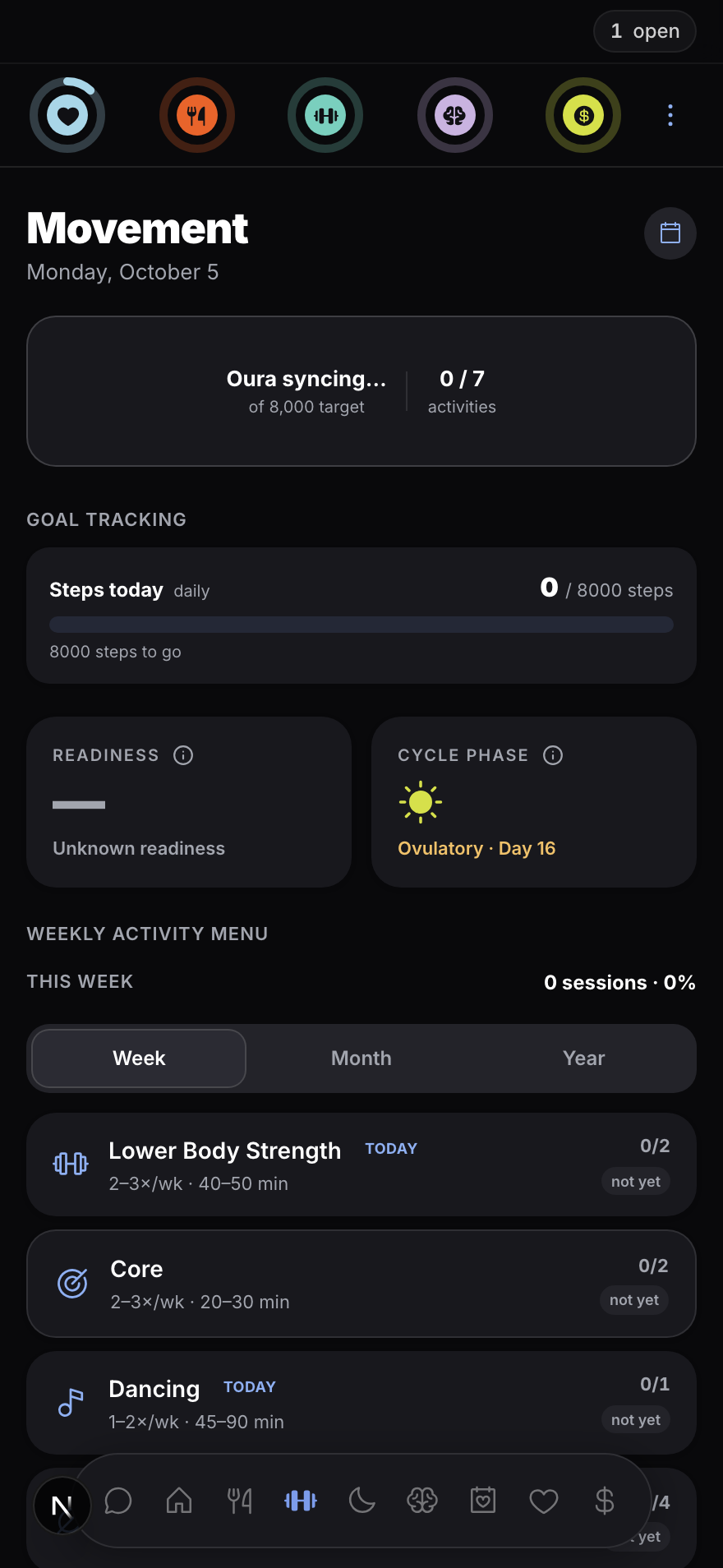
What it is
A private operating system for one person's health, money, training, cycle and mind. Built over months as a working tool rather than a demo, it pulls Oura, labs, bank statements and workouts into one surface and puts a conversation in front of it, so logging a meal or asking why recovery dropped happens in the same place. Every screenshot here is from a copy running on invented data.
Problem
A life spread across twelve apps, none of which talk to each other.
Sleep in one app, labs in a PDF, spending in a bank export, workouts somewhere else, and the things that connect them, that recovery dropped the week the iron did, that the spending spike and the bad sleep were the same fortnight, visible to nobody because no surface holds both. This is a system built for exactly one person, over months, as a working tool rather than a portfolio piece. That constraint is what makes it possible, and it is also what makes it ungeneralisable.
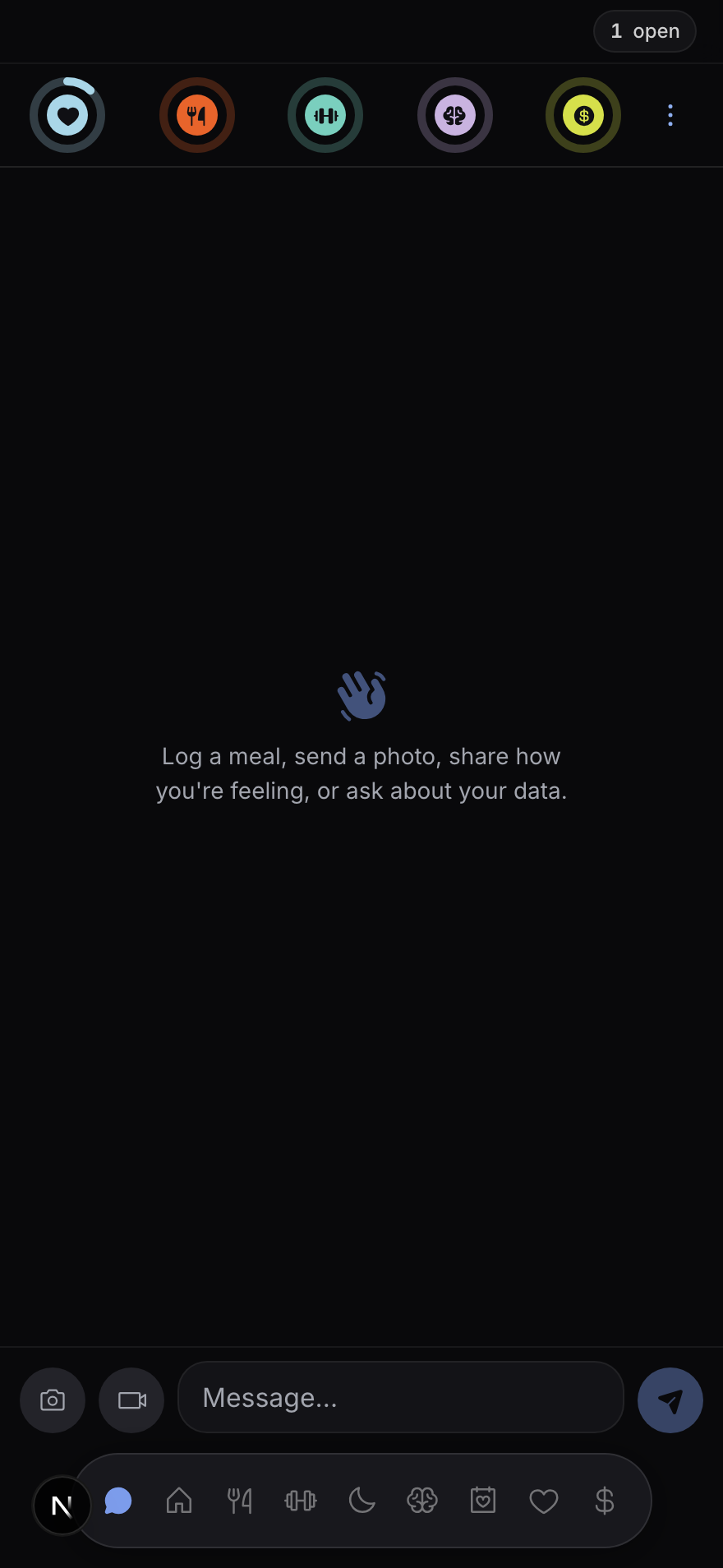
The front door is a sentence, not a dashboard
Log a meal, send a photo, say how you're feeling, or ask about months of your own history. One field, one gesture, no decision about where it belongs.
Every domain keeps a ring, everywhere
Health, nutrition, movement, mind and money each hold a ring at the top of every screen, filled by that domain's own progress. Putting a whole life in one system only pays off if the whole life stays visible from inside any part of it.
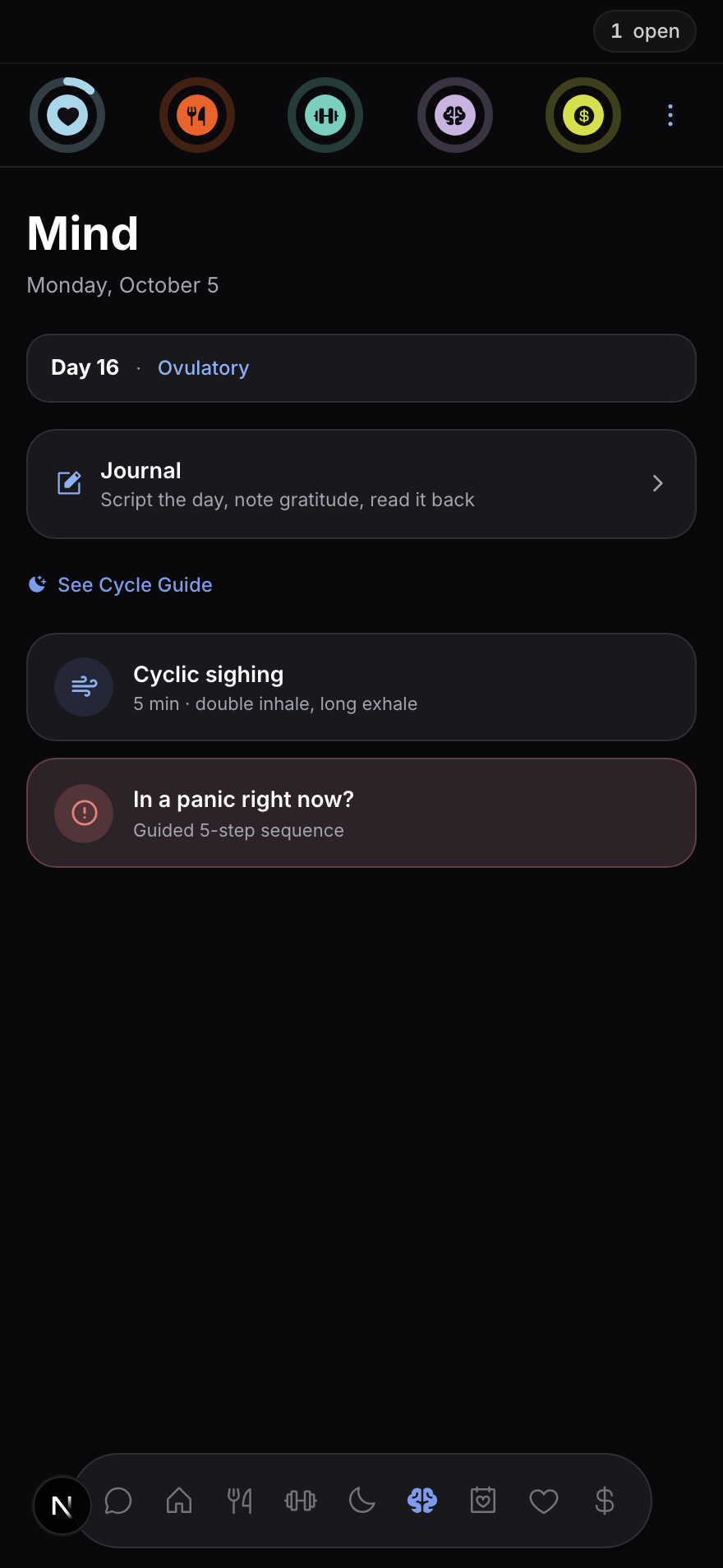
Context before content
The mind surface opens with where the cycle is, because phase changes what the rest of the screen means. Beneath it sit the things that are useful in a bad moment rather than the things that look good in a dashboard: a journal, a breathing sequence, and a guided route for a panic that is happening right now.
Key Insight
Built for one person, which is the point and the limit
There is no onboarding, no empty-state copy written for a stranger, no settings for preferences that will never change. Defaults are hard-coded to one body, one cycle, one set of goals, and that is why it does things a general product could not justify building. It is also why none of it generalises. The honest version of this case study is that it is a case of one: good for finding questions, useless as evidence.
Stack & Tools
AI
design
code
infra
Next
Inner Light
Open question
When one person's health, money and training sit in a single surface, does anything become visible that twelve separate apps kept apart?
What the data shows
Which domains get opened together in a session, which get logged by conversation rather than by form, and which surfaces are built and then never returned to.
What it does not
A system with one user cannot be generalised. It is a case of one, useful for finding questions rather than answering them.
More client and product design case studies at hannadevries.com