Thought Objects
A shape built from the times you were already that way
Research · Product Design · Build · 2026
What it is
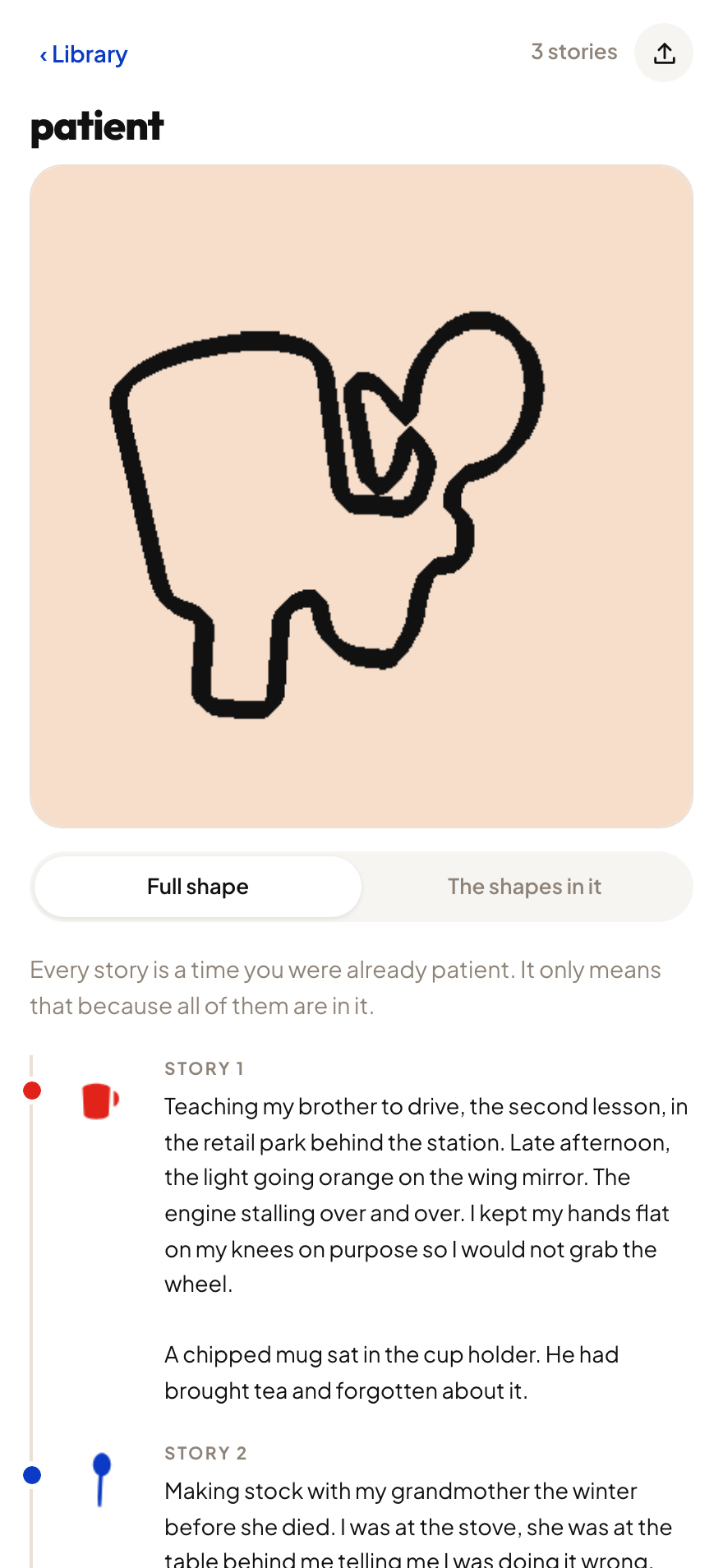
Name a quality you want more of. Recall three specific occasions when you already had it, and the object that happened to be in the room each time. The three objects merge into one shape, and that shape gets bound to the situation where the quality is needed. It comes from a workshop method and from a research proposal of my own, and the app's job is to carry the method onto a screen without the screen ruining it.
Problem
The method works because the object is a real thing in a real room.
The workshop it comes from ends with clay: you make the merged form with your hands and put it somewhere specific, and it works partly because it is a distinctive physical object in one place. Moving that onto a phone breaks exactly that. A form on a lock screen is seen dozens of times a day, habituates inside a week and becomes furniture. Every decision in this product is organised around repairing that one loss, which mostly means showing the object less rather than more.
The word has to be yours
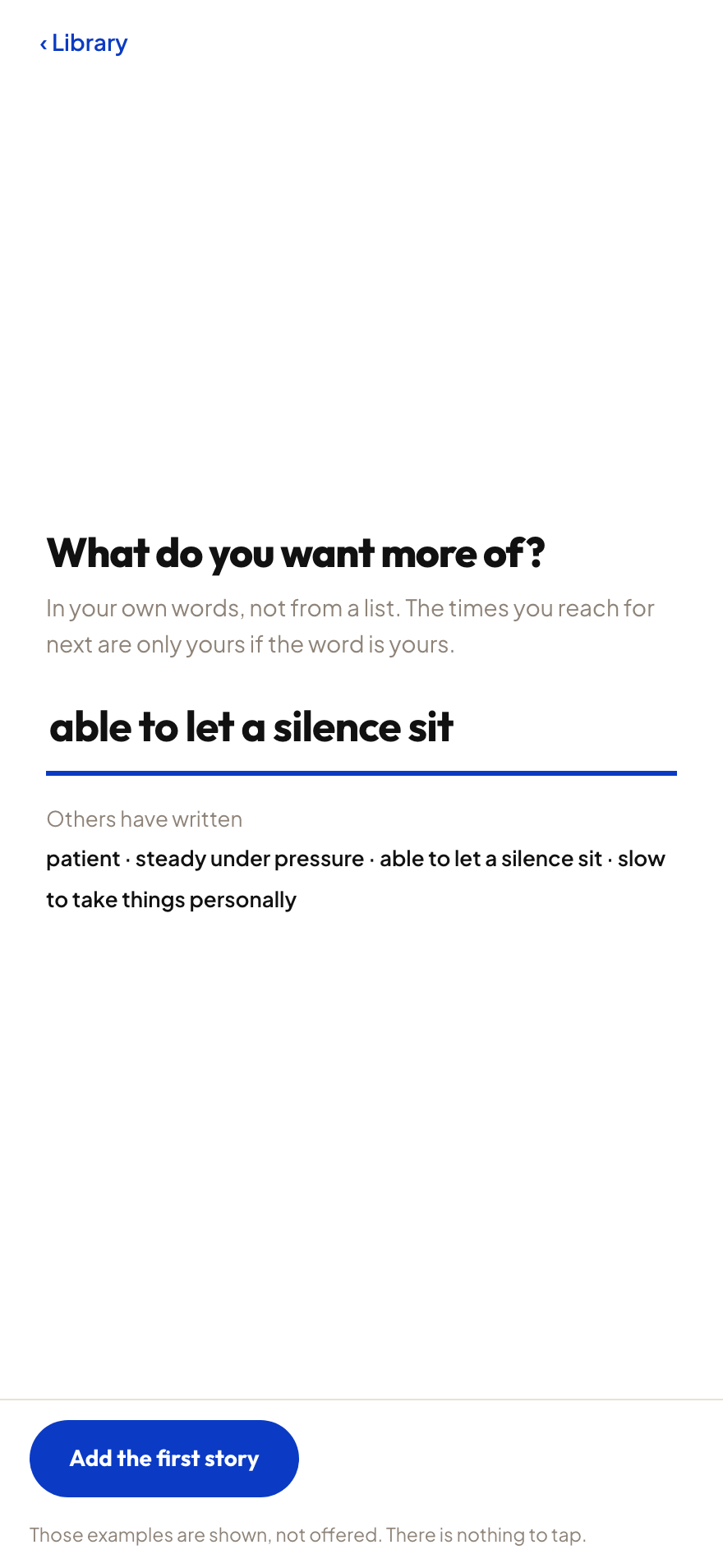
What do you want more of, in your own words, not from a list. Examples are shown as static text and cannot be tapped. A picklist makes it the app's quality rather than the person's, and memories recalled against a supplied word are weaker than memories recalled against your own.
Every story is a time you were already that way
Three occasions, each written as a specific scene rather than a tendency: the retail park behind the station, the stove with the garden gone white, the hospital chair by the window. The merged shape sits above them, and a line underneath says plainly that adding a story changes it, because the shape is made from all of them.
The parts stay visible
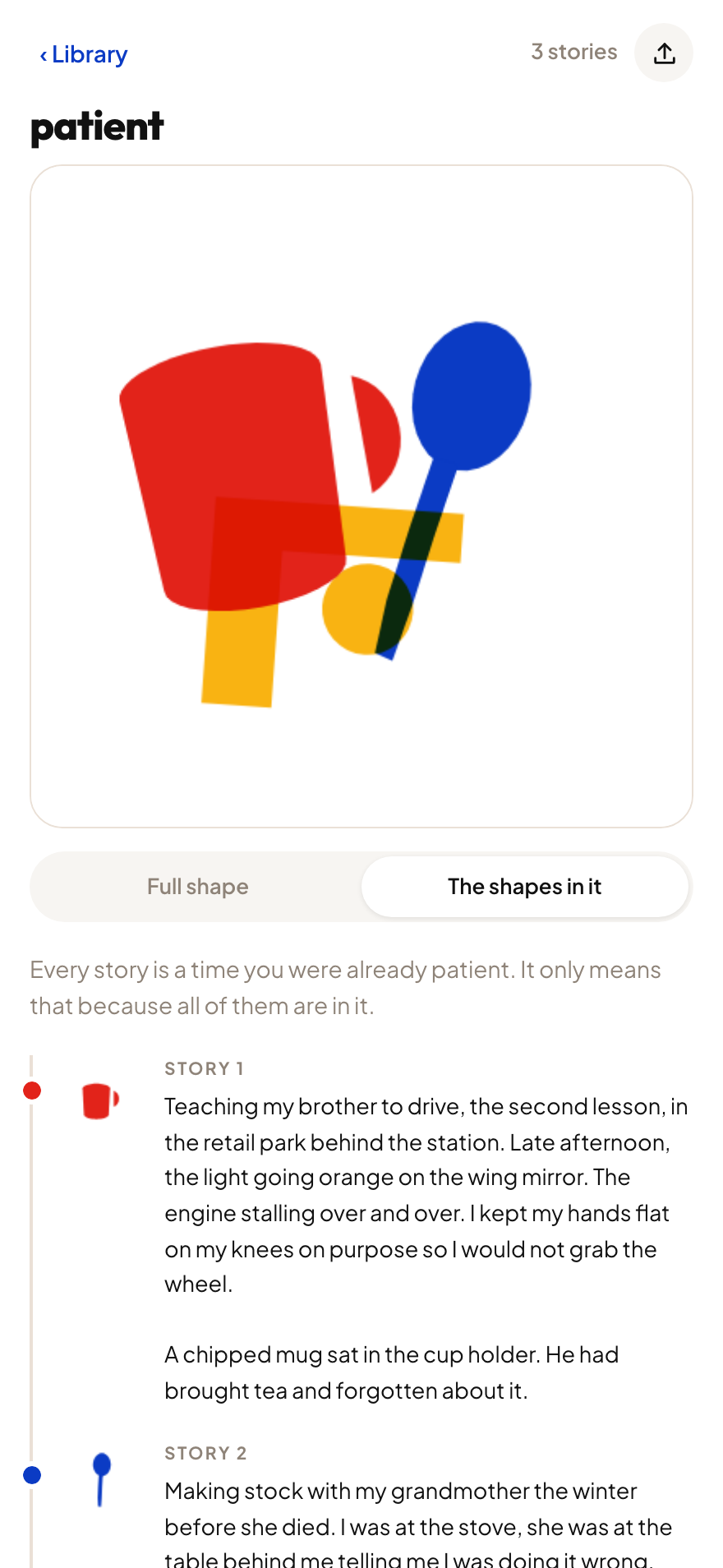
A toggle swaps the merged form for the three objects it came from: the chipped mug in the cup holder, the wooden spoon with the burnt edge, the brass window latch. Keeping the sources inspectable is what stops the final shape becoming an arbitrary graphic.
One object per quality, and no gallery
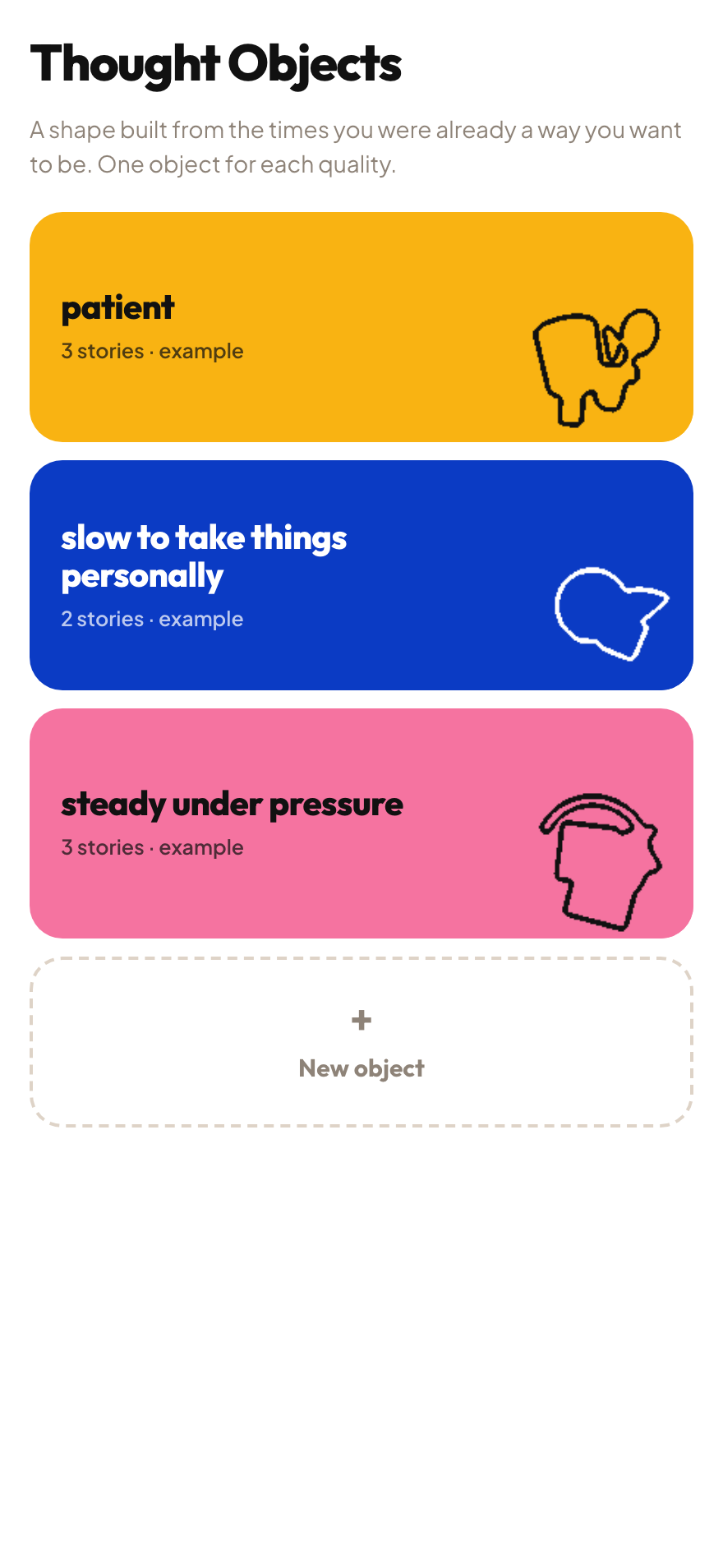
Each quality gets its own object and its own colour. There is no collection view that lays them out as a set, because a set turns private assignments into a display and dilutes every one of them.
Key Insight
Ask for the object last
Each story is built before the object is mentioned: where it happened, the time of day, who was there, what was visible, what the body was doing. Only once the scene is live does the app ask what object was in it. Asked early, people supply something symbolically appropriate, and a symbolic object is a decision. Asked last, they retrieve something that happened to be in the room, and only the retrieved one is tied to the episode. It is the cheapest rule in the spec and the one most likely to be designed away by someone trying to shorten the flow.
Stack & Tools
AI
code
infra
Next
NeuroFlow
Open question
Can several remembered objects be merged into one shape a person recognises as their own?
What the data shows
Whether three stories get finished or abandoned, whether the merged shape is kept or rejected, and whether people return to add a fourth story to an object they already made.
What it does not
Recognising a shape is not the same as the shape working as a cue. Whether it does anything in the situation it was bound to is outside what this prototype can see.
More client and product design case studies at hannadevries.com